Author: turkishdiplomats.com

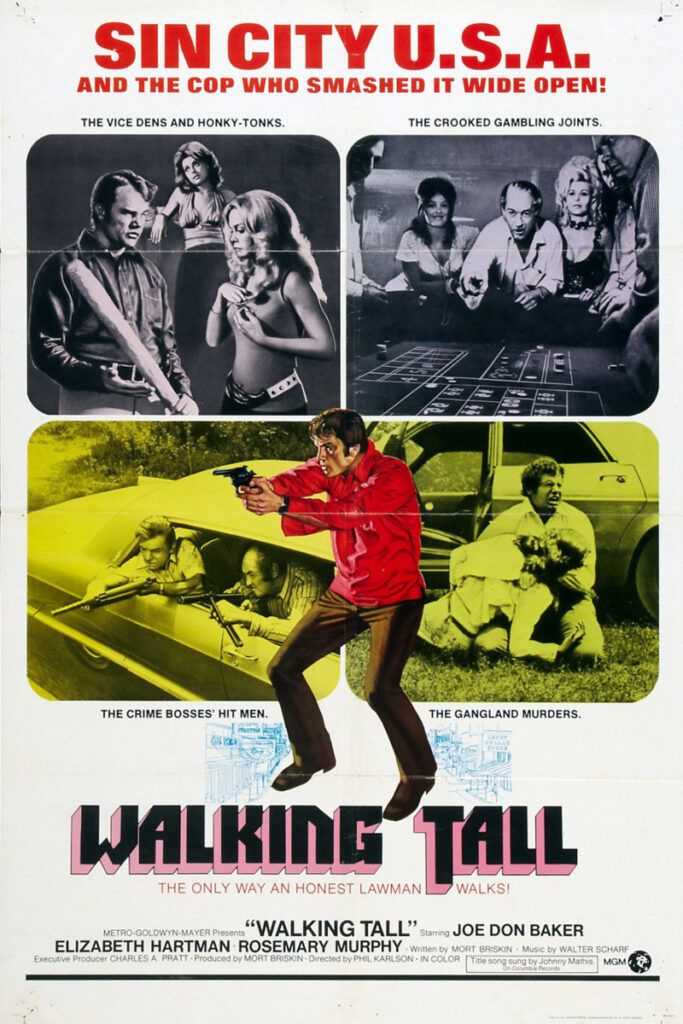
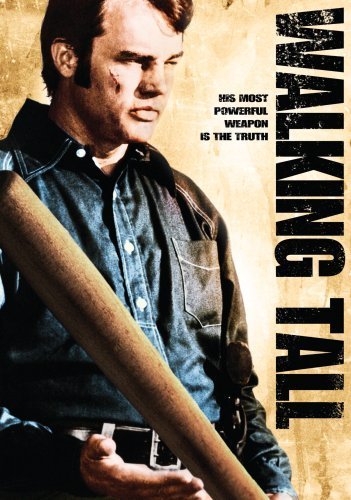
  • Walking Tall (1973)

    Alright, listen up, America. Walking Tall is what happens when you push a man too far. And not just any man—Buford Pusser. Yeah, that’s his real name. He’s a walking muscle slab from Tennessee, and when the law fails, he grabs a two-by-four and becomes the law. You know how some people call customer service when they’ve had enough? Buford builds a pine cudgel and starts swinging like Paul Bunyan in a bad mood.

    They kill his dog. They try to kill him. Then they kill his wife. You think he’s gonna call for backup? Nope. He IS backup. Walking Tall is 1970s justice at its most red-blooded—before superheroes and CGI, back when men settled scores with timber and rage. It’s violent, loud, and not even pretending to be subtle. And it’s everything that makes you say, “Wait… this actually happened?!”

    This week on The Turkish Diplomats present Charming Noise, we take the leash off this Southern-fried juggernaut and ask the important questions: Was Buford a folk hero, or just America’s angriest carpenter?

    🔍 TRIVIA, MYTHS & FOLKLORE: Walking Tall (1973)

    1. Based on a Real Man
      Sheriff Buford Pusser was a real person, former wrestler turned lawman in Tennessee. He really did carry a big stick. Yes, really.
    2. The Stick Had a Name
      Buford’s signature weapon, a massive hickory club, reportedly had multiple versions and was said to be reinforced with steel—though this may be legend more than lumber.
    3. Hollywood vs. History
      The film plays fast and loose with facts. While Buford did clean up crime in McNairy County, many locals contest just how heroically—or recklessly—he did it.
    4. Tragedy on and off Screen
      The real Buford Pusser’s wife was killed in an ambush—just like in the film. Buford himself died in a car crash in 1974, just before he was set to star as himself in Walking Tall Part II.
    5. Multiple Remakes
      Walking Tall was remade in 2004 starring Dwayne “The Rock” Johnson. Spoiler: Buford’s two-by-four got an upgrade, but the spirit (and smashing) remained.
    6. Cult Hero or Mythical Beast?
      Over the decades, Buford’s story has grown into Southern folklore. Depending on who you ask, he was a brave reformer… or a hothead who picked fights with the wrong people.
    7. Tourism Bump
      The movie inspired Walking Tall tours in McNairy County, Tennessee—where the Buford Pusser Home & Museum still stands today.
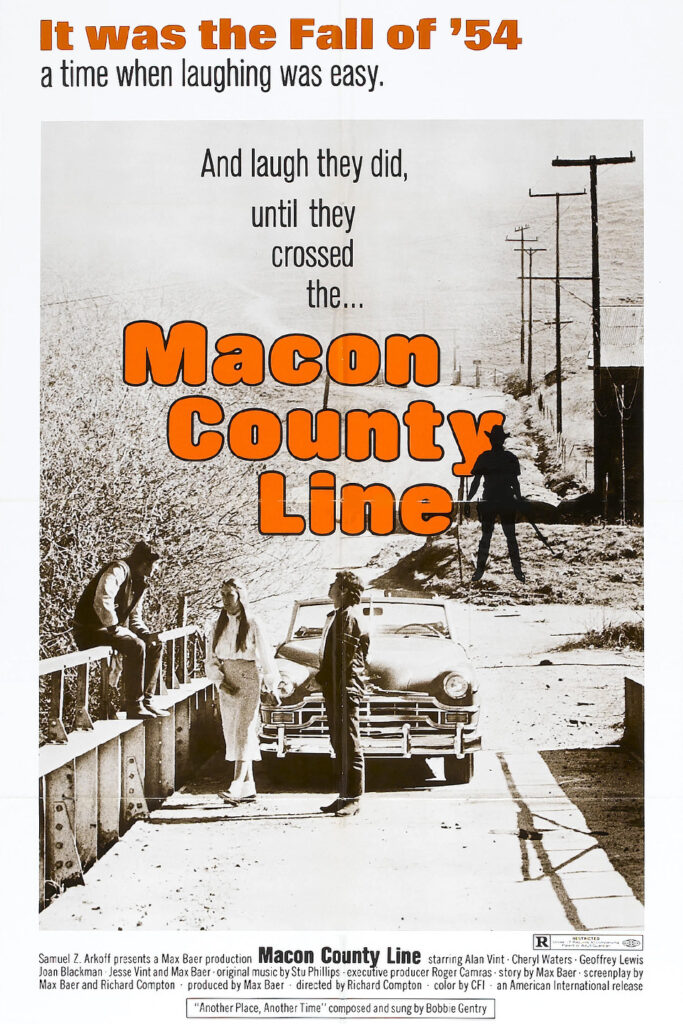
  • MACON COUNTY LINE (1974):

    A downhome tale of misunderstandin’, misfortune, and mistaken identity—with more shotguns than good decisions.

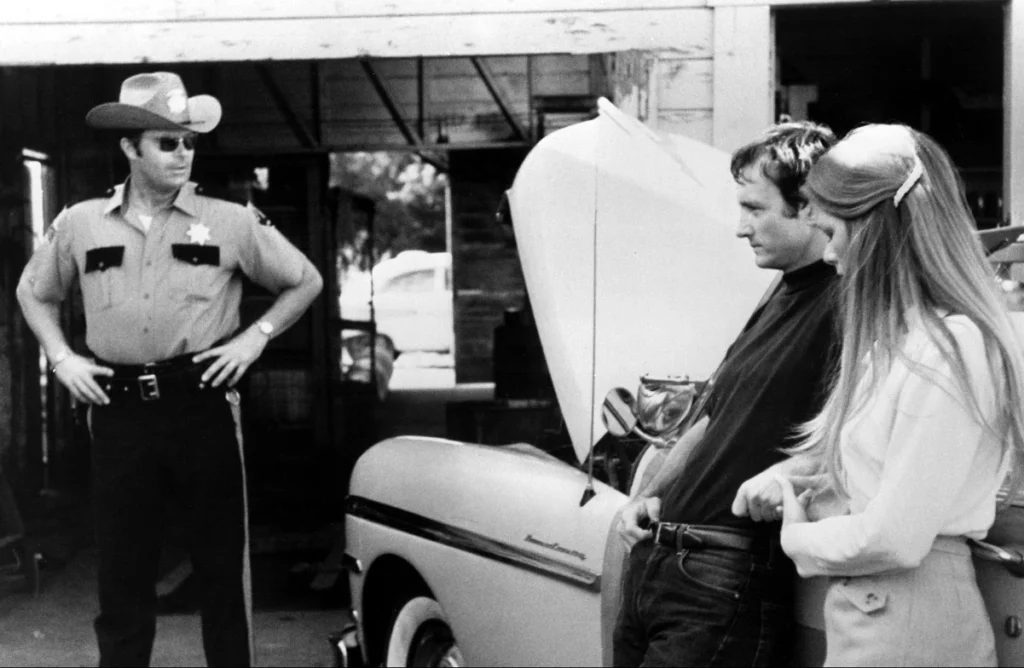
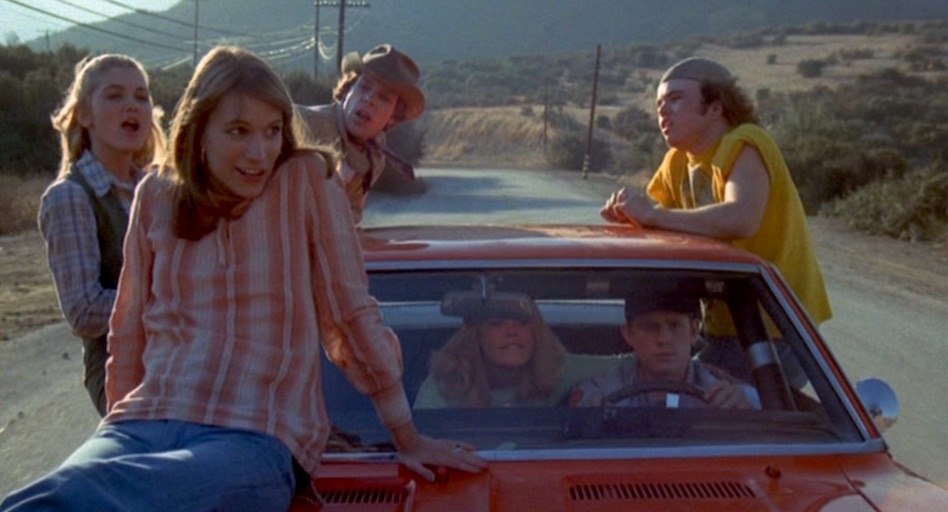
    Howdy folks! Now lemme tell ya ’bout a movie what’s got more twists than a possum on a tilt-a-whirl—Macon County Line. It starts out with two good ol’ boys, Chris and Wayne Dixon, just cruisin’ around in their hot rod lookin’ for a little adventure before headin’ off to the military. They’s drinkin’ soda pop, flirtin’ with waitresses, and mindin’ their own beeswax when, wouldn’t ya know it, they get caught up in a big ol’ mess they didn’t start.

    See, there’s this sheriff fella—mean-lookin’, mustache sportin’, and not much on the whole “due process” thing. When his wife turns up deader than a Sunday picnic in a thunderstorm, he figures these boys done it. Ain’t got no proof, but who needs proof when you got a 12-gauge and a whole county line to run ‘em down?

    It’s suspenseful, it’s Southern, and it’s got more tension than Granny’s girdle at a pie-eatin’ contest.

    🎙️ And guess what? Us folks over at The Turkish Diplomats present: Charming Noise done sat down and reviewed this rollercoaster of a backroads crime tale! That’s right—we got a brand-new episode where we talk Macon County Line, justice gone sideways, and why you should never, ever trust a man wearin’ mirrored sunglasses in rural Georgia.

    So grab yer headphones, climb up in the truck, and tune in to our latest podcast episode—available now on Podbean, Spotify, Apple Podcasts, and that there fancy new one called iHeart Radio.

    Did you know?

    Budget vs. Box Office: Made for just $225,000, it grossed over $30 million worldwide, making it the most profitable film of 1974 in terms of cost-to-gross ratio.

    Indie Powerhouse: It was one of the highest-grossing independently financed films of its time.

    Script Origins: Max Baer Jr. wrote the story on the back of *The Beverly Hillbillies* scripts during filming breaks.

    Fiction Disguised as Fact: Though marketed as a “true story” to attract audiences, the plot and characters were entirely fictional—a common tactic in 1970s exploitation cinema.

    Docudrama Vibe: The film adopted a gritty, realistic tone similar to *Walking Tall* and *The Texas Chain Saw Massacre*, both of which also blurred the line between fiction and reality.

    Leif Garrett Connection: Young Leif Garrett, who played the sheriff’s son, also appeared in all three *Walking Tall* films.

    Spiritual Successor: Its success led to *Return to Macon County* (1975), which, despite the title, wasn’t a direct sequel.

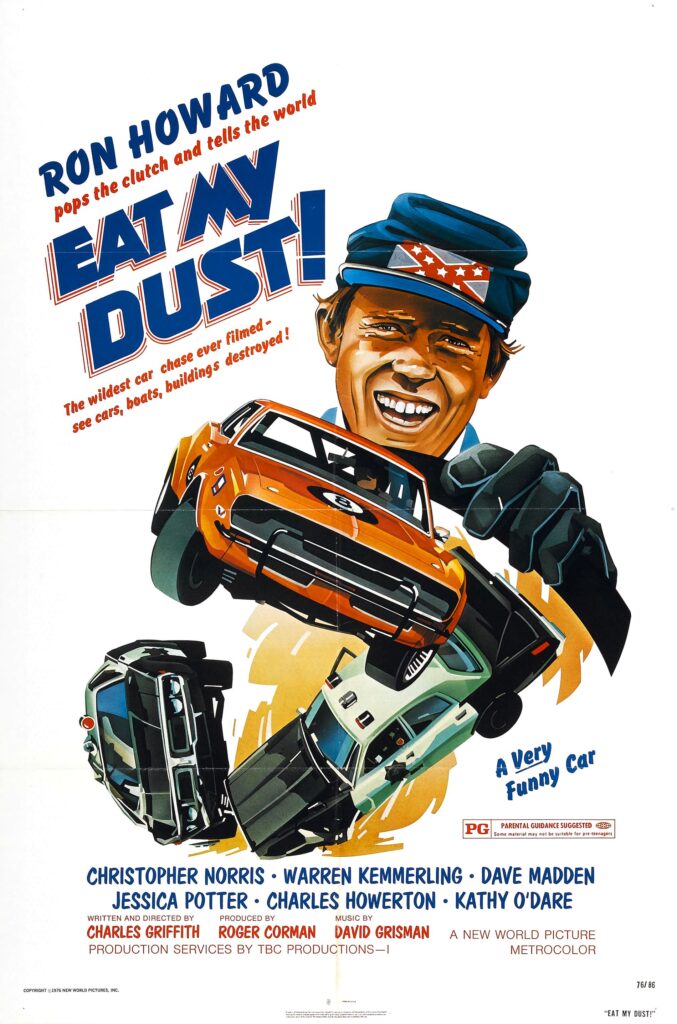
  • Eat My Dust” (1976)

    Copyright HAG ©2008

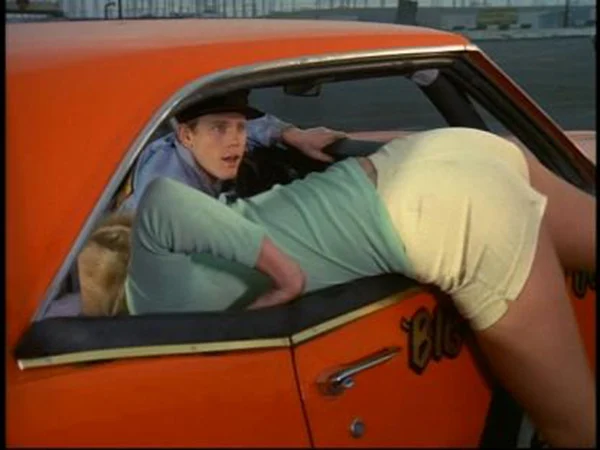
    Imagine a tale, if you will, not of superheroes or gothic alleys soaked in nihilism, but of American adolescence tearing recklessly across asphalt in a stolen race car. Eat My Dust, directed by Charles B. Griffith and starring a feather-haired Ron Howard, is a loud, smoky ode to speed—capitalism’s unholy offspring paired with juvenile rebellion.

    We open on Hoover Niebold, an all-American nobody with delusions of legend status. He steals a stock car to impress a girl, kicks up some metaphorical and literal dust, and leads the entire local police force on a prolonged, almost mythological chase through small-town 1970s America. The plot? Thin as a cigarette paper. The point? Velocity and chaos. It’s less a story and more a cultural noise, the type only America could produce in the era between Vietnam and disco.

    The Turkish Diplomats, bless their brains, took this movie and laid it bare in their podcast Charming Noise, asking: What if Ron Howard had gone bad? The answer, dear listeners, lies somewhere between a burnout and a punchline.

    Bonus: Trivia, Folklore & Movie Lore

    • Trivia Fact #1: Eat My Dust was Ron Howard’s way into directing. He agreed to star in this film only if the studio allowed him to direct his next project (Grand Theft Auto, 1977).
    • Trivia Fact #2: The car chase scenes were filmed so cheaply that much of the “stunt driving” was improvised on public roads with minimal safety precautions.
    • Trivia Fact #3: Charles B. Griffith, the director, also wrote Little Shop of Horrors (1960), proving he had a knack for strange cult energy.
    • Folklore Rumor: It’s whispered among gearhead cinephiles that the car used in Eat My Dust still exists, hidden in a Texas barn, waiting for one last joyride.
    • Behind-the-Scenes Oddity: The original title was supposed to be The Car Stealers, but test audiences hated it. Producer Roger Corman said, “Fine, then call it whatever the kids are yelling at each other these days.”


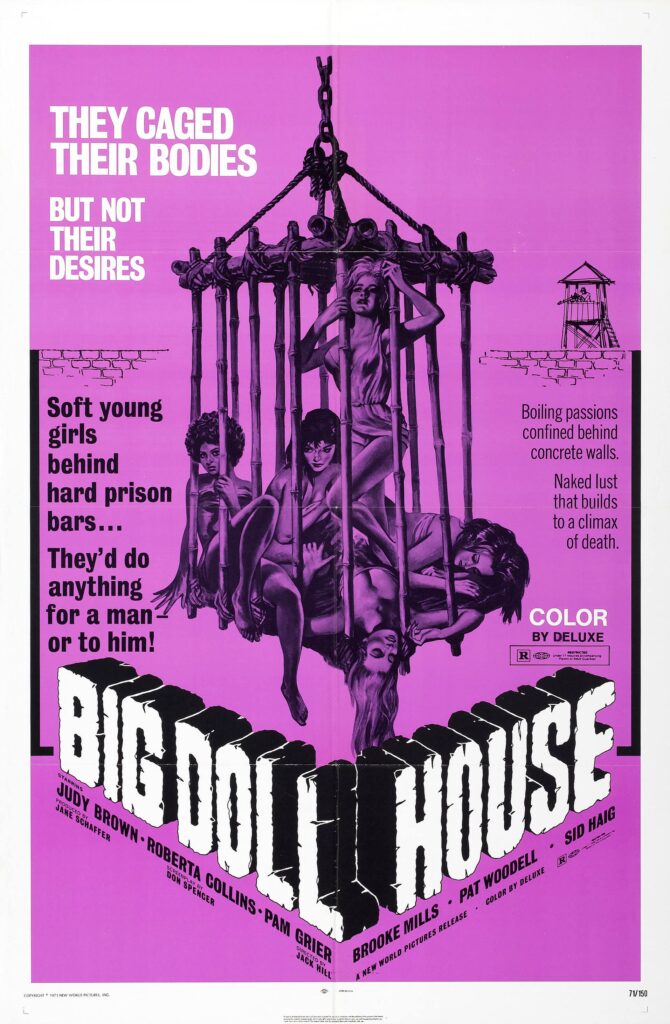
  • THE BIG DOLL HOUSE (1971)

    Copyright HAG ©2008

    A Tale of Chains, Sweat, and Pretty Little Nightmares
    (As reviewed in the episode of The Turkish Diplomats present Charming Noise)

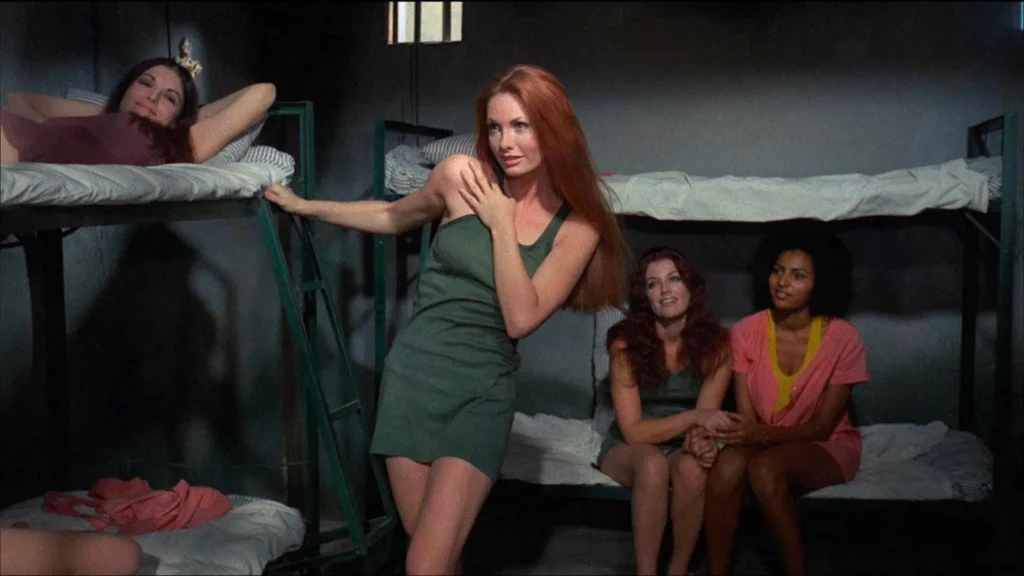
    There is a place, half-forgotten by the gods and wholly ignored by the decent, where the sun burns like punishment and the only thing sharper than the barbed wire is the silence between screams. They call it The Big Doll House, though there is nothing playful about it. Here, women are thrown into cages like broken dolls—painted lips, cracked morals, and fists clenched tight against the sickness of survival.

    Pam Grier leads the damned like a lioness in shackles—her voice smoke, her stare a storm. Corruption slinks through the corridors in leather boots and leering grins. What begins as a prison film ends as a symphony of rebellion, shot through with betrayal, gunpowder, and the kind of fury that only the forgotten know how to sing.

    In our next episode of Charming Noise, the Turkish Diplomats peer into this fever dream of pulp and punishment, and try—somewhat foolishly—to make sense of the chaos. We promise nothing except wild metaphors, poor decisions, and very sweaty analysis.

    🎧 Available on Podbean, Spotify, Apple, iHeartRadio, and wherever darkness and sarcasm meet.


    📍 Now playing on Podbean, Spotify, Apple, iHeartRadio, and anywhere podcasts go to misbehave.

  • I Dismember Mama

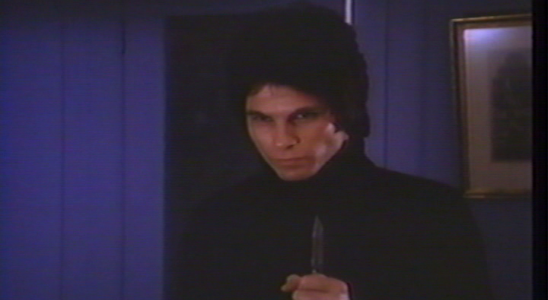
    Well now, down in that dim little corner of 1972 where shag carpets and cigarette smoke met low-budget cinema, there was a film—if we dare call it that—by the name I Dismember Mama. A title with all the grace of a hatchet in a birthday cake.

    The story—or the loose collection of scenes pretending to be one—follows poor Albert, a man fresh out of a mental institution who’s got more mother issues than a Tennessee Williams character. After deciding that therapy isn’t quite cutting it, he embarks on a not-so-charming spree of murderous self-help.

    Between rambling monologues, wildly inconsistent lighting, and a tone that swings like a mood ring at a funeral, Albert ends up befriending (in the loosest sense of the word) a young girl, and well… let’s just say the film tries to tiptoe toward tenderness but ends up belly-flopping into the shallow end of uncomfortable.

    It’s not quite horror, not quite drama, and not quite coherent—but it’s exactly the sort of cinematic misadventure that The Turkish Diplomats Present Charming Noise was born to dissect. If you’ve ever wondered what would happen if Norman Bates had access to a lava lamp and a six-pack of Schlitz, this one’s for you.

    Where to Listen and explore

    We Want you to Listen to this crap at your favorite podcast preference so we tried to get on everywhere. and we threw in a few of our other pages fro you to explore.

  • Black Mama, White Mama (1973)

    🎙️ A Most Inappropriate Escape

    (As reviewed by The Turkish Diplomats on “Charming Noise”—available wherever podcasts misbehave.)

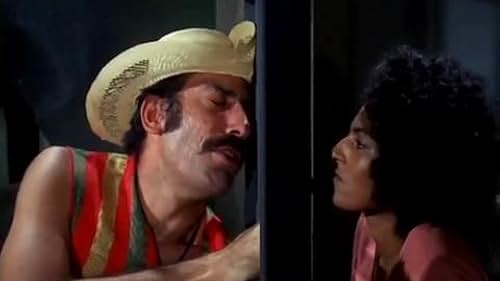
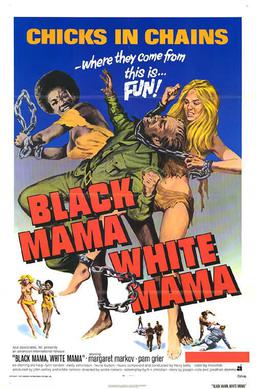
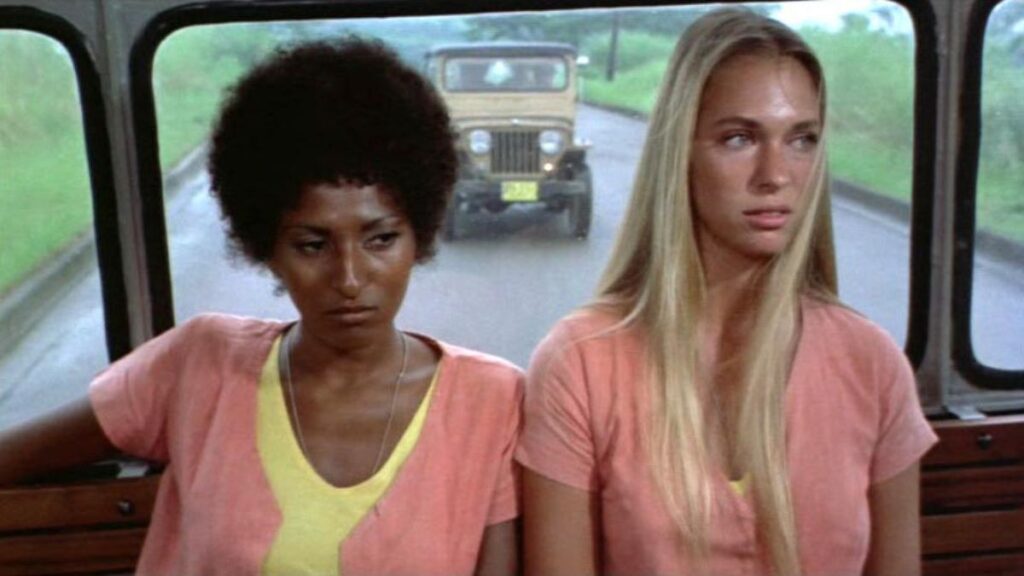
    Ah yes, the 1970s—a simpler time, when prison uniforms were optional, explosions were mandatory, and social commentary came with matching go-go boots. Black Mama, White Mama stars the incomparable Pam Grier and Margaret Markov as two wrongfully imprisoned women—one a revolutionary, the other a runaway rich girl—shackled together and on the run in what can only be described as a feminist buddy comedy if your definition of “feminist” involves gratuitous nudity, sweaty chase scenes, and a flamethrower-wielding nun.

    Yes, it’s a cinematic stew of revolution, revenge, awkward bath scenes, and a plot that feels like it was written on a cocktail napkin mid-car chase. But don’t worry—your favorite Turkish Diplomats are here to unshackle the chaos in our newest episode of Charming Noise, the podcast where bad movies go to get gloriously over-analyzed.

    So fire up your transistor radios (or just click a link like a normal person) and subscribe now on Podbean, Spotify, Apple, iHeartRadio, and wherever you legally acquire podcasts. Because let’s face it—any movie that begins with a prison break and ends in a Marxist gunfight deserves at least one more diplomatic debrief.

  • FROGS

    FOR IMMEDIATE RELEASE – 1972

    THE TURKISH DIPLOMATS PRESENT CHARMING NOISE: A MOVIE REVIEW OF “FROGS” – THE SLIMY, HOPPING APOCALYPSE YOU DIDN’T KNOW YOU NEEDED

    Ladies and gentlemen, children of the swamp, and weary travelers of this strange American experiment—heed this warning. The amphibians are coming, and they are pissed.

    The Turkish Diplomats—your most reliable, least stable source for filmic dissection and charming auditory chaos—have sacrificed their time, their sanity, and possibly their very souls to bring you a harrowing review of Frogs (1972), a film so aggressively terrible, so completely devoid of rational storytelling, that it may very well be an unintentional masterpiece.

    Before you accuse us of frog-mongering, let’s examine the evidence: Frogs stars a young, yet already exuding raw machismo, Sam Elliott, playing a freelance photographer who finds himself trapped on a Southern plantation surrounded by the grotesque, nature-strikes-back horrors of murderous frogs. Yes, you read that correctly.

    Are the frogs wielding tiny knives? Are they operating complex Rube Goldberg-esque kill machines? No. They mostly sit there, existing ominously, like small, damp aristocrats watching their human prey trip over themselves and everything else in a flailing panic. It’s a slow-burn existential nightmare in which the true horror is realizing you’ve been watching a movie where, for a full 90 minutes, amphibians barely move—AND YET, you cannot look away.

    We break it all down, scene by swampy scene, on this week’s episode of The Turkish Diplomats present Charming Noise, where we dissect Frogs with the precision of a scalpel and the reckless abandon of a drunk wielding said scalpel. Was this a sly commentary on environmental collapse? A low-budget tax write-off? A fever dream someone mistook for a screenplay? We have theories, and you need to hear them.

    Tune in wherever fine podcasts are distributed to the masses—Podbean, Spotify, Apple, and NOW on iHeart Radio—because someone had to watch Frogs, and you damn well owe it to yourself to hear about it.

    Hop to it, folks.

    END OF TRANSMISSION.

  • Shadows That Shine: The Timeless Magic of Prince Achmed


    🎬 A Magical Shadow from the Past: The Adventures of Prince Achmed (1926)
    By Ivy D. Lens, Resident Film Historian

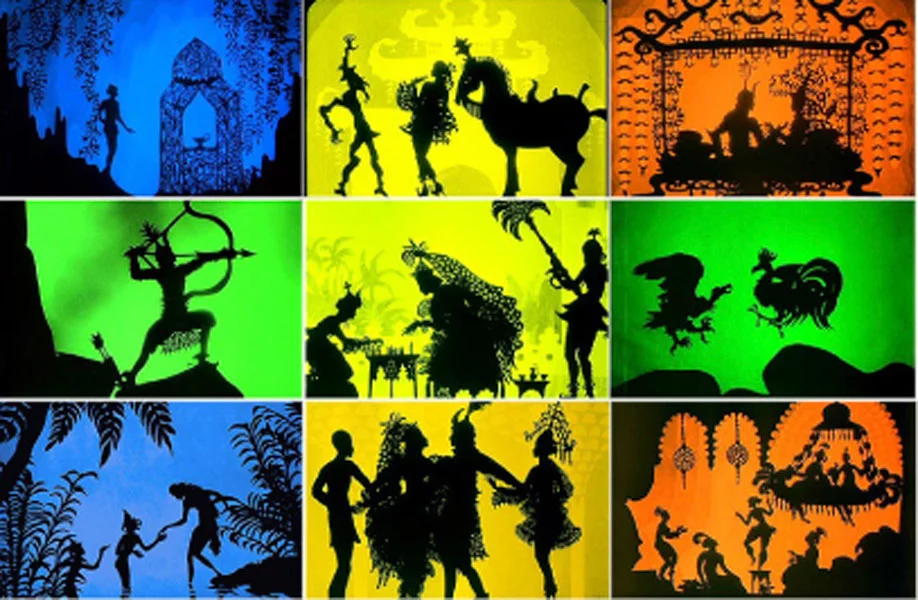
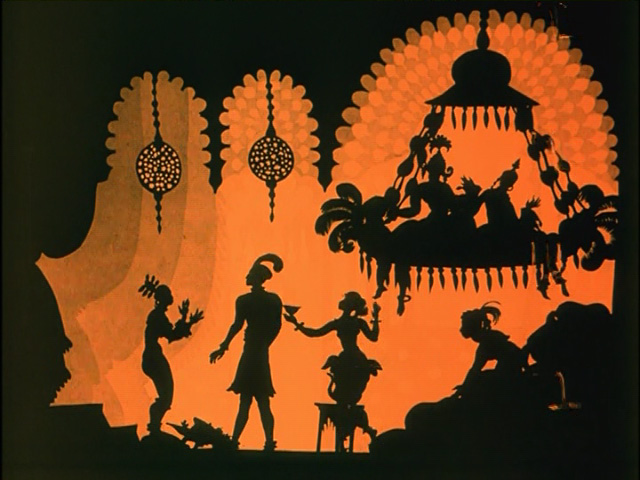
    Long before Pixar was rendering photorealistic water and before Mickey Mouse steamboated his way into history, there was a flickering silhouette riding a flying horse through an Arabian night. That silhouette belonged to Prince Achmed—and he made his debut in 1926, in what is now celebrated as the oldest surviving animated feature film.

    Directed by Lotte Reiniger, a trailblazing German animator with the patience of a saint and the hands of a surgeon, The Adventures of Prince Achmed is not just a film—it’s a shimmering piece of cinematic poetry. Reiniger didn’t just make a movie; she hand-cut each character and backdrop from black cardboard, then moved them frame by painstaking frame using stop-motion techniques under backlit glass. Think puppetry meets shadow theatre meets wild artistic vision, all before modern animation had even found its feet.

    Reiniger was working in Berlin during the Weimar Republic, a golden age of experimentation and bold ideas in German cinema. She was inspired by Chinese shadow plays and infused the film with tales from One Thousand and One Nights, complete with wicked sorcerers, magical islands, flying horses, and—of course—an epic love story. The film bursts with imagination, even without a single word of dialogue. Its visual storytelling is so powerful, you almost forget you’re watching cut paper come to life.

    What makes Prince Achmed so special, aside from beating Disney’s Snow White to the punch by more than a decade, is its blend of elegance and adventure. It’s a reminder that animation doesn’t need color or celebrity voices to transport us—it just needs a story, a spark, and someone bold enough to try.

    For students with an interest in film, animation, or just really cool history, The Adventures of Prince Achmed is a must-watch. It’s 65 minutes of magic, mystery, and meticulous artistry—and proof that even shadows can shine on the big screen.


    The Adventures of Prince Achmed (1926)

  • Empire of the Ants (1977)

    FOR IMMEDIATE RELEASE – 1977

    THE TURKISH DIPLOMATS PRESENT CHARMING NOISE: A MOVIE REVIEW OF “EMPIRE OF THE ANTS” – WHEN NATURE DECIDED TO EAT US ALL AND SOMEHOW MADE IT BORING

    Friends, countrymen, and survivors of the drive-in apocalypse—brace yourselves. The ants have arrived, and they are here to take what is rightfully theirs.

    The Turkish Diplomats—your most devoted connoisseurs of cinematic catastrophes and deeply suspect artistic choices—have once again stared directly into the abyss and returned with a report. This time, it’s Empire of the Ants (1977), a film that dares to ask, “What if ants were huge, homicidal, and really bad at special effects?”

    Yes, we’re diving headfirst into this unholy spectacle, featuring the legendary Joan Collins—who spends the entire movie looking like she just realized her agent is going to be fired the second she gets back to civilization. The premise? A sleazy real estate scam goes sideways when a batch of toxic waste turns everyday ants into towering, mind-controlling overlords. The result? A terrifying glimpse into a future where mankind is enslaved by insects, or at the very least, some deeply unconvincing papier-mâché monsters.

    But don’t let the premise fool you—this is no ordinary creature feature. This is a disaster wrapped in a farce, stuffed inside a fever dream, and we’re here to pick it apart like deranged entomologists armed with microphones and just enough caffeine to make bad decisions.

    On this week’s episode of The Turkish Diplomats present Charming Noise, we break it all down: the hypnotic power of bad dubbing, the existential dread of watching human actors pretend to be controlled by what is very clearly an ant on a fishing line, and the unshakable horror of realizing that somehow, some way, this thing got a theatrical release.

    Join us as we dive into the madness, available now on Podbean, Spotify, Apple, and iHeart Radio—because somebody had to watch Empire of the Ants, and it sure as hell wasn’t going to be you.

    END TRANSMISSION.

  • She Demon (1958)

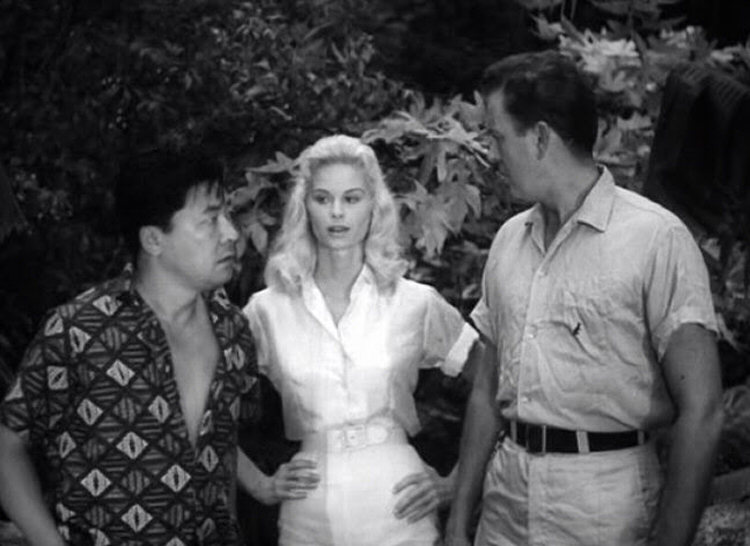
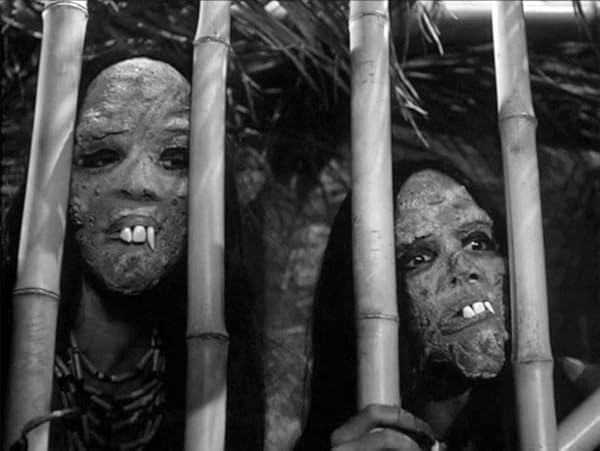
    By God, the boys have finally posted the first episode of a new season! Yes Season 3, Episode 1 of the Turkish Diplomats Present Charming Noise is finally live. In this extra-long very special episode, Tom, Calvin, and Paul review what some have referred to as “a movie.” From 1958, “She Demons” by B-movie director Richard Cunha provides the fodder for the boys to nearly talk longer than the actual movie. There’s a lot to check out…hurricanes, shipwrecks, mild but pervasive racism, barely-clothed dance troupes, and that’s before the Nazis show up! Then there’s a laboratory, an unlikely love story, underground laboratories, monster ladies, German geothermal energy exploitation, and maybe a nuclear bomb! Speaking of a bomb, that may be what this movie is, but you’ll have to listen to find out.

    In the year 1958, under a brooding sky and amidst the ghostly waves of the ocean, a sinister tale unfolds in the horror classic *She Demons*. The story follows the intrepid journey of a group of survivors who find themselves washed ashore on a mysterious and uncharted island after their boat is wrecked in a violent storm. As they venture deeper into the heart of the island, they stumble upon a secret laboratory operated by a mad scientist, whose grotesque experiments have turned beautiful women into hideous, monstrous creatures—demons, both in appearance and in spirit.

    Our protagonists, led by the resourceful Fred Maklin and the courageous Jerrie Turner, must navigate a perilous maze of traps and confront the malevolent Dr. Leroux. The narrative masterfully combines elements of suspense, fear, and an exploration of human resilience in the face of unimaginable horrors. Each character’s struggle with their inner demons mirrors the external terror they face, crafting a hauntingly poignant reflection on the essence of humanity.

    In the midst of this eerie atmosphere, allow me to recommend a delightful respite from the darkness. The “Turkish Diplomats Present Charming Noise” podcast, hosted by Thomas, Calvin, and Paul, offers a refreshing analysis and witty commentary on films such as *She Demons*. Their quest to bring the world reviews of bad movies ensures you can savor the essence of these classics without subjecting yourself to their full duration, should you wish to spare yourself.

    For those eager to delve deeper into the world of cinema, Thomas, Calvin, and Paul’s insights can be explored further at TurkishDiplomats.com. As our trio guides you through the labyrinth of forgotten films, you’ll find that even the most obscure horrors have their place in the annals of cinematic history.